

12 Nov ‘Boring’ retail is dead, but Hammersmith BID shows how innovative experiences can revive West London’s Town Centres
Hammersmith town centre is leading the way in grasping opportunities presented by the spending power of ‘new millennials’ through innovative schemes which are reinventing the town centre.
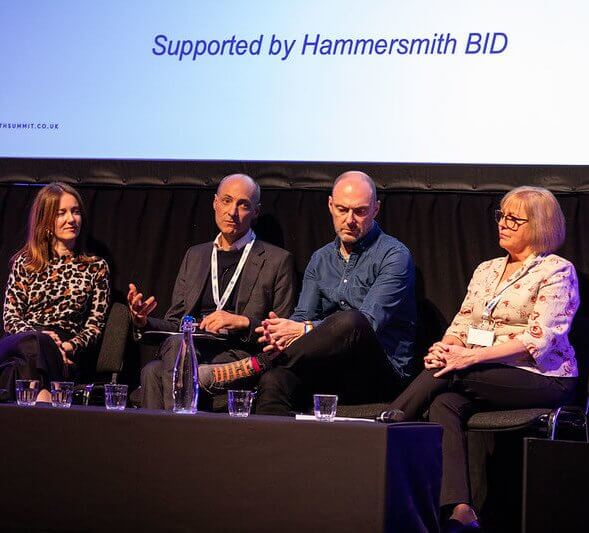
That was the message heard by delegates attending the ‘Town Centres in a Changing Word’ debate at the recent Capital West London Summit in the Lyric Hammersmith theatre, where a panel of experts discussed ways of creating vibrant, prosperous and sustainable town centres.
Sponsored by Hammersmith BID, the debate heard how some of Hammersmith BID’s latest initiatives, such as the Parcels Not Pollution clean air delivery service, were exemplars of best practise in addressing the evolving challenges of the retail sector. Parcels Not Pollution replaces the last leg of the delivery journey with bicycle couriers, aiming to tap into local office workers’ online spending habits and provide them with items ordered online or bought at local stores with zero emissions.
Patricia Bench, Director of Hammersmith BID, said: “Retail has not gone away, but it has changed. As curators of town centres, which BIDs are, we have to create the right environment for businesses by working with them to develop and deliver those innovative leisure and cultural experiences.”
She explained that many businesses wanted to be part of the community and had expanded their view of what they wanted their BIDs to deliver – they wanted town centres that were not just safe and clean, but which provided a rich leisure and cultural offer. In addition, there was focus on sustainability, making the BID’s role in delivering a green town centre even more important.
She cited Hammersmith as a glowing example of how West London centres were leading the way in re-inventing themselves as vibrant community centres with varied, modern offers. This included the Hammersmith BID Summer Festival, with the annual big screen showing Wimbledon and streaming live from the Royal Opera House in the heart of the town centre.
Chair Ben Rogers from Centre for London had opened the debate by reminding delegates of West London’s reputation as a ‘City of Villages’ with vibrant town centres embedded in their DNA as vital community centres. He emphasised the importance of ensuring town centres’ future economic success given their importance in the New London Plan.
Marie Hickey, Director of Commercial Research at Savills, presented data showing that retail trends were changing, with the new focus on how to maximise the opportunities presented by millennials’ spending habits.
“We’ve all seen the headlines about the changes in retail, the shift to online, and the impact on legacy stores, but what does this mean for our town centres going forward?” she asked.
“The reality is that the way we are spending money has changed; we now spend more on experiences, such as holidays, eating out, cultural experiences and even gym memberships, and less on buying stuff.
“The good news is that the change is generating opportunities as well as challenges. Many online stores are transferring to physical stores because they value in-town locations – statistics show that 29% of online sales are generated from stores where the customer has originally seen or experienced the product.”
She told the Summit that the future of town centres will move away from the ‘boring’ retail of the past, towards an increased leisure and cultural offer, including residential, student housing and commercial offices in a town centre mix.
Bringing people into town centres by creating places that people love was also central to Martin Evans, Creative Director of U + I, who said: “You have to go back to the beginning to understand what town centres were and why they are where they are now.
“Town centres were the well where people gathered to get their water. Then people started shipping and trading and they would also take out stalls. Essentially town centres are places of gathering, enterprise, trade, people and society. Town centres are complex. There is always a need to gather people to have a common purpose.”